


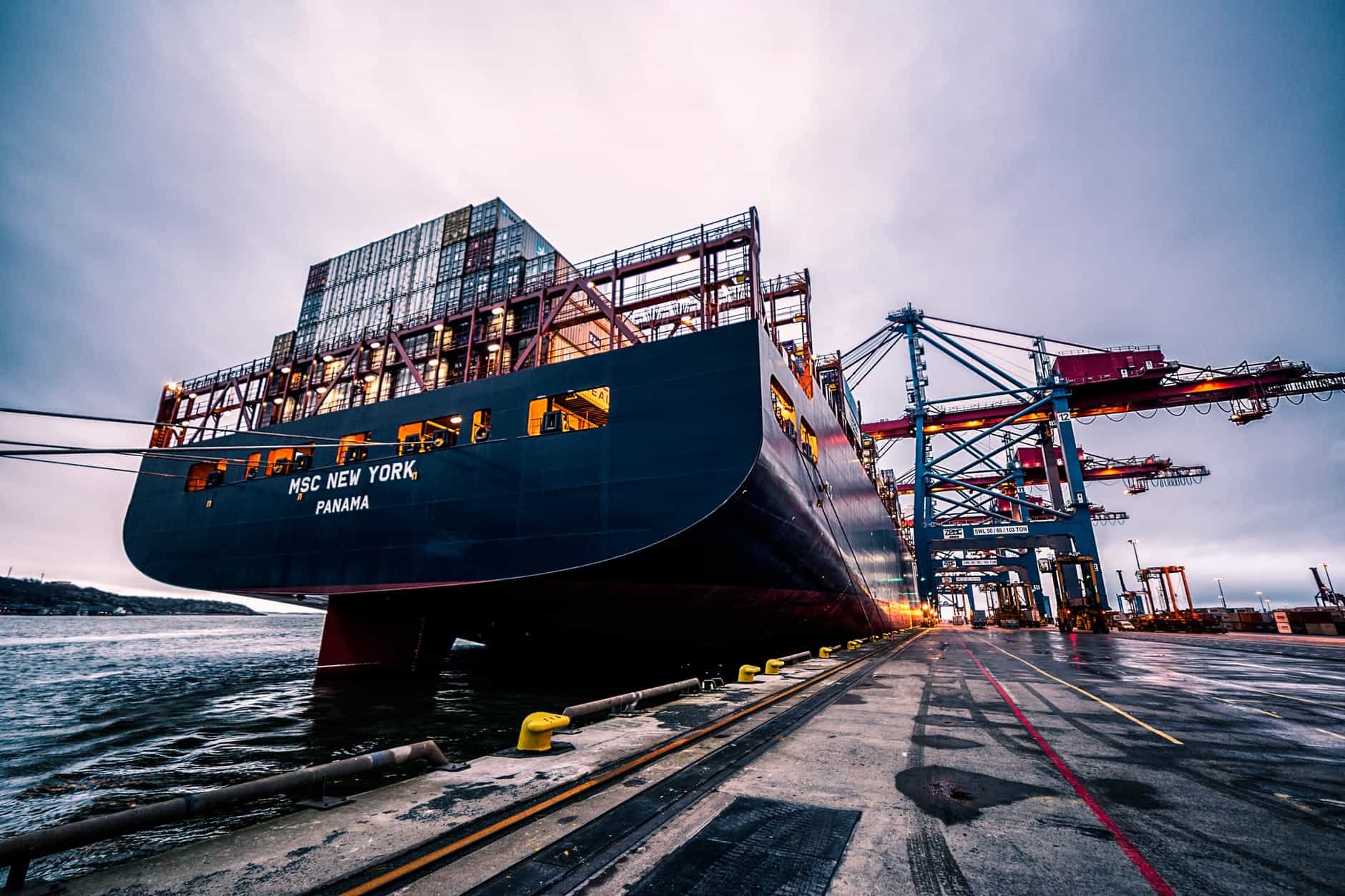
The world is consuming more, and as a result more goods are moving by sea to the tune of 9.5 billion tons in 2013.
According to Deloitte report, Global Trends to 2030 – Impact on Ports Industry, consolidation and rationalization will be the primary trend impacting the ports industry for the next decade. Influencing these trends are globalization, increased competition, alliances and cooperation, supply chain integration, containerization of cargo, multimodal transport and infrastructure, increasing vessel size, focus on security, and IT applications.
For port operators the adage – if it ain’t broke, don’t mess with it – is becoming less and less popular. As a business, port operators are expected to be more efficient in the use of the facilities, after all, equipment, people and processes – they all cost money. Any efficiency gained translates to more profits for the business.
Port operators are increasingly looking for smarter ways of operating the business. They also recognize that like other industries they depend on data. What participants in the port ecosystem know is that access to data needs to be real-time if it is to retain its value.
The call to be real-time

According to Sumeet Puri, senior vice president, global head of Systems Engineering, Solace, “whether it is the ships that are moving, the ports that are handling the ships, the containers on those ships, the entire supply chain management, and the peripheral industries that participate in it – the non-maritime players, for example, the railroad, etc. All of these are striving for real-time information so they can make better decisions.”
For the maritime industry, it is the automation and trying to become real-time that form the foundation of digital transformation. But for the transformation to effective he believed that the industry and its participants must all transform.
The challenge for a port operator like the PSA Singapore, operator of the upcoming Tuas Port in Singapore, is orchestrating a transformation of all participants at the same time – something Puri concedes would be difficult to mandate.
“The best they can do is form consortiums, to which a consensus can be arrived and standards adhered to,” he reasoned. He cited the example of the International Civil Aviation Organisation (ICAO), the body which is managing and running the standards with participation from various ANSP and the air traffic control system of various nations. ICAO adopted system wide information management (SWIM) to harmonize the exchange of aeronautical, weather and flight information for all airspace users and stakeholders.
Event hurdles ahead
In discussing how activities within any port are tracked and managed, Puri referred to these as events. He defined an event as a representation of a happening.
“A ship docking into a port. A container being from a ship is an event. A container being loaded on an automated guided vehicle (AGV). All of these are events. They need to be processed, and business logic needs to be applied to them,” he added.
He goes on to explain that within a port operation, there are multiple events happen with different systems taking responsibility for the tracking and management of those events.
“A container management event is different from order management, location management or logistic event. For a business, like the maritime industry, to become real-time, it needs to evolve and use an event-driven architecture where events are generated, consumed and produced by applications. The more agile, the more performance-based becomes real-time,” he explained.
Early days
Puri acknowledged that awareness of event management architecture as a strategy is still in its early days. He pointed to industry concerns around cost savings, agility, cost of technology as factors that influencing speed of adoption.
“From an IoT perspective, that realisation is happening now. The technology has started to mature enough so that the business benefits can be delivered and applied for cost-saving real-time visibility,” he added.
People also need to be aware of what technology options are available to them. Who can help them be cost-effective in the right way?
“That awareness is happening. The development community is becoming current, they’re educating themselves, experimenting with some of these new technologies. So the pace is actually accelerating,” he continued.
Business pressure
Puri conceded that the pressure is mounting to become real-time. “The technology to leverage small gateways, those communication mechanisms including IoT sensors and devices, has been happening in the past few years. For some companies it has already reached maturity,” he opined.
He acknowledged that an event-driven architecture (EDA) requires a different mindset. “Here you break your applications down into micro services. Thinking in an event-driven manner, thinking microservices, getting used to event catalogues, getting used to public taxonomy about field events, deploying an foundational event mesh will allow you to increase your events on an as-you-go basis. At the core, your system will be real-time,” suggested Puri.
Going forward
A lot of businesses will start to have applications which are inherently event-driven, the mindset is already changing. In that sense, Gartner’s definition of an EDA is a reflection of what is happening as businesses and IT finally align.
Gartner defines EDA as a design paradigm in which a software component executes in response to receiving one or more event notifications. It is more loosely coupled than the client/server paradigm because the component that sends the notification doesn’t know the identity of the receiving components at the time of compiling.
And that architectural design might well suit the maritime industry where the expansive ecosystem of participants represents old and new players, those with deep pockets as well as those living on a day-to-day basis, organisations with global reach as well as specialist small businesses serving just one segment of the community.
Puri postulates that suppose applications could be prototyped in a few months, where you basically dip your toes into the water and see the benefits like a control experiment. Beyond that it will accelerate, evolve enterprise wide and develop all your event taxonomies and event catalogues as your business transforms over time.
“Opportunistic but I think that’s the pragmatic way to do it. I see being event-driven as an architect strategy accelerating because it’s so much more real-time and an agile form of business, much better than previous strategies,” he concluded.
Gartner predicts that by 2022, support of event notifications in low-code application platforms and API management tools will make EDA common in new application design.
Two years if not very far. So, if you haven’t started thinking about even-driven architecture, now might be the time to.


