






Asian economies are set to be larger than the rest of the world combined, contributing to 60% of global Gross Domestic Product by 2030. However, the COVID-19 pandemic has cast a shadow over the region’s previously optimistic outlook.
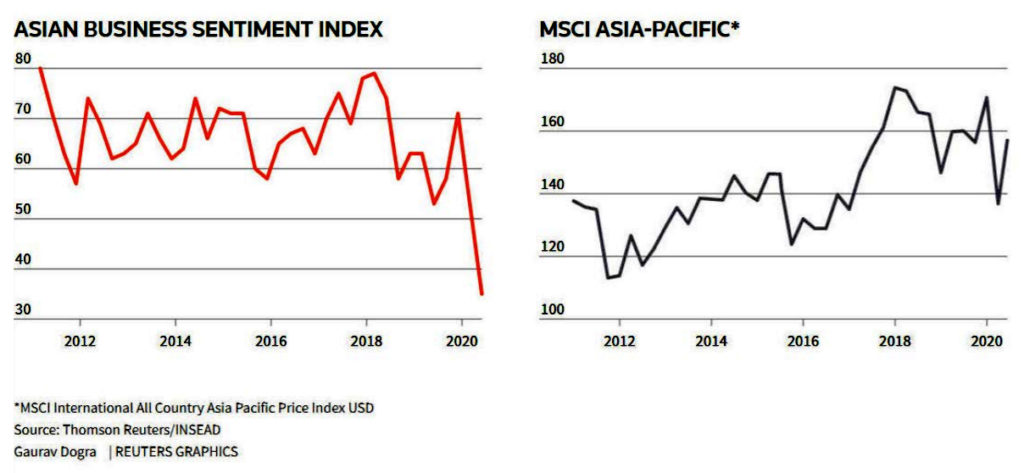
Business sentiments in the region have fallen to a record 11-year low, according to a recent Thomson Reuters–INSEA survey, with majority flagging a worsening pandemic as the biggest risk over the next six months.
Considering this gloomy reality, CIOs have had to rationalize their IT portfolios very quickly to ensure that their operations can stay afloat over the past few months. They also have had to do this while planning for business expansion and be prepared for when things eventually get better. All these, while working on a reduced budget.
This is the time for CIOs to think creatively and invest strategically and focus on cost effective solutions. CIOs will need to tap on technologies like cloud and data virtualization that can help deliver real cost savings while ensuring little disruptions to business and IT operations.
Keeping a close eye on budget
In the first quarter of 2020, major economies in Asia, including Singapore, were hit hard. The city-state experienced its highest unemployment rate in a decade, which rose from 2.3% in December 2019 to 2.4% in March this year.
At the same time, job vacancies declined to its lowest since September of 2010. Additionally, close to 4,200 workers were placed on short work weeks or temporary layoff, and paid hours of work decreased.
Naturally, business leaders have had to cut costs across business functions, and this include technology-related spending especially since IT is not a direct revenue generator.
IDC projected that IT spend in Asia-Pacific will decline by a negative -1.3% in 2020 despite increased demand for cloud and other solutions driven by remote working continue to prove crucial in business continuity and recovery.
In comparison, IT spending in the region grew 3.6% year-over-year in 2019.
Prior to the pandemic, the standard practice for many CIOs was to maintain 70% of their IT budget for keeping-the-lights-on with existing technologies. They would use 30% on new projects that are designed to drive innovation and business growth.
However, with the current challenges and lean resources, CIOs now have to rationalize their IT portfolio by deprioritizing new projects, lowering premium support to standard levels, and eliminating renewals on certain technologies.
The problem is that these efforts, despite lowering costs in the short term, may hurt businesses in the long run when the economy eventually recovers.
Cloud technology and cost savings
One technology that many CIOs have found to be cost-effective is cloud. Cloud not only shifts workloads away from data centers, which are costly to own, operate, and maintain, to cloud service providers like AWS, Microsoft Azure, and Google Cloud, but also transitions cost from capital expenditure to operational, lowering total cost of ownership (TCO).
Nonetheless, CIOs need to be cautious of the risks involved in cloud migration even as they consider the instant savings from leveraging cloud technology.
The process can be quite challenging as it involves replacing commercial-off-the-shelf (COTS) solutions with SaaS software, rewriting legacy applications, or porting on-premises applications to the cloud, also known as ‘lift and shift’.
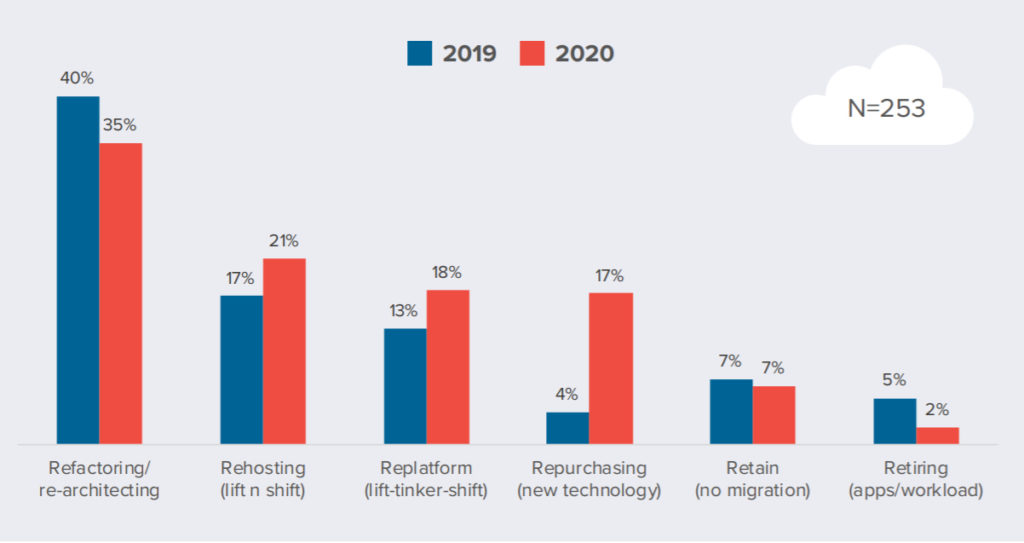
In fact, a recent Denodo study revealed that only 21% of over 250 businesses surveyed are lifting and shifting.
Most importantly, such efforts come with business disruption risks. With data straddling dual environments in the process of migration, IT may need to keep old applications running while onboarding new ones. Business users must figure out which applications to use for which data.
Cost effective and seamless cloud migration
How then can IT accomplish a cleaner cloud migration without risking disruption to the business?
The answer lies in data virtualization. Data virtualization technology establishes an enterprise-wide layer that provides a real-time, consolidated view of the data across new and old applications.
Cloud migration can be done under the safety of this cover, as data virtualization understands which data resides in which application, and fetches the right data accurately, relieving business users the pain of having to know the location or the format of the data.
Businesses gain substantial cost and resource savings of about 75% as data virtualization accomplishes this modernization feat by enabling real-time data delivery with zero replication. That is, data virtualization allows businesses to save on storage costs as well as from the resource required to physically extract, transform, and load the data into the cloud systems.
Furthermore, data virtualization by providing a low- to no-code environment saves on resources and the effort it takes to set up the data integration engine, enabling a faster time-to-migration.
Logitech is one company that has successfully leveraged data virtualization to migrate from on-premises systems to the cloud. Logitech undertook a cloud-first policy and embarked on transitioning its on-premises databases, applications, data warehouse, analytics, and reporting, to the cloud.
It used data virtualization as an abstraction layer minimizing business disruptions and seamlessly migrated its data to the cloud. Five years on, most of Logitech’s applications now run on the cloud, including the data virtualization.
In the process, the company saved on IT resources deployed, and this translates to cost savings as well as infrastructure and storage cost efficiencies.
IT portfolio rationalization – Do more with less
CIOs can emerge from this tough economic climate in a stronger position by leveraging efficient, cost-saving technologies such as cloud and data virtualization.
As CIOs contemplate rationalizing their IT portfolios, investing in these technologies will bring immediate cost savings in existing hardware and software.
Cloud and data virtualization can also help to unlock strategic value and accomplish more for their businesses, bringing a genuine return on investments.