In healthcare, where even the smallest mistake can have life-altering consequences, digital transformation is becoming less about convenience and more about necessity.
However, in Indonesia, over 80% of healthcare facilities remain untouched by digital technologies, according to Transform Health +4, a coalition envisioning “a fully digitalised and integrated primary health care system in Indonesia by 2030”.
The pandemic became a catalyst for the Government of Indonesia to advance digital transformation plans across the public sector, including in the health sector.
In 2021, the Ministry of Health (MoH) launched the Digital Transformation Strategy 2021-2024, which aims to unify electronic medical records and health apps nationwide. Key initiatives include telemedicine, AI integration, and supply chain management.
As Indonesia modernises its largely underserved healthcare system, hospitals are increasingly turning to technology to improve patient safety and the overall care experience.
Standardisation, key to healthcare transformation
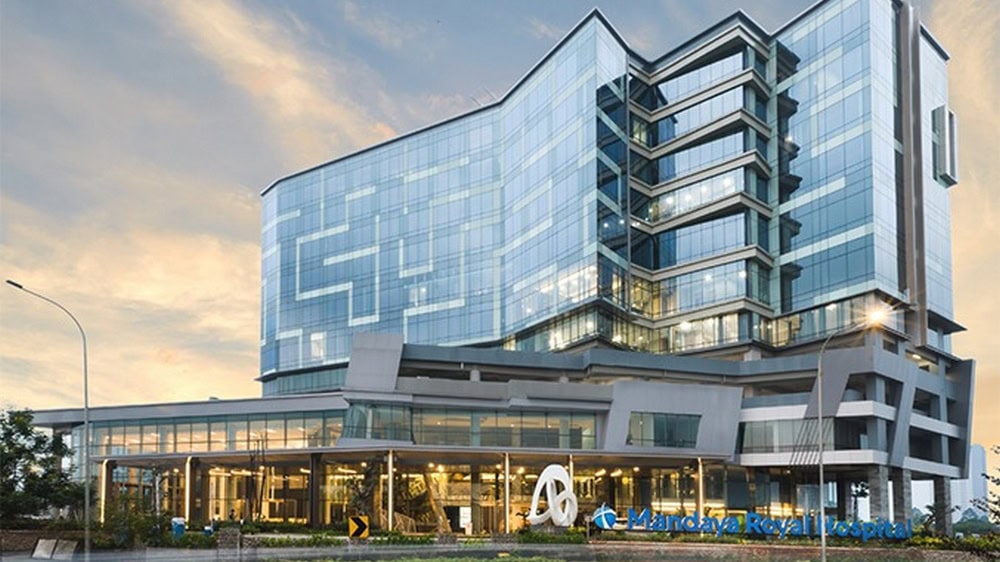
Mandaya Hospital Group
Benedict Sulaiman,the CTO-IT director of Mandaya Hospital Group, a prominent private healthcare provider in Indonesia, emphasised that, when it comes to digital transformation, having standards as the foundation is vital.
“If you already have that standard, it will be like a copy-paste implementation for you because you already know about it,” he said.
For Sulaiman, standards enable replication across hospitals and reduce the need to reinvent processes. Moreover, they build institutional knowledge and experience, allowing hospitals to avoid starting from scratch every time.
Standardisation translates to better scalability, speed, and consistency in the digital transformation of healthcare.
As processes become standardised, implementation also becomes easier over time. While early deployments are resource-heavy, later rollouts require less effort.
He also emphasised the shift from internal teams to hybrid or vendor support. In his experience at Mandaya, they initially relied on internal teams for control and learning, then scaled by working with trained vendors that followed predefined standards.
With this approach, only minimal supervision is needed over time, enabling more rapid expansion.
Digitalisation and focusing on patient safety
“Patient safety is top priority; people cannot leave room for mistakes,” stressed Sulaiman, and highlighted that manual systems and processes are risky, whereas digitalisation offers safer, more reliable healthcare delivery.
“When we are dealing with patient safety, we cannot rely on people alone. They have limitations. Sometimes when they work overnight, they might forget things or overlook something. And you cannot just say, ‘Oh, sorry, I missed that.’ Well, system and digital transformation are helping us to overcome those sorts of things,” he explained.
A major threat to patient safety is LASA (Look-Alike, Sound-Alike) medications. These errors occur when drugs have similar names, packaging, or labelling, leading to confusion during prescribing, dispensing, or administration.
According to the World Health Organisation, LASA is responsible for an estimated 6.2% to 14.7% of all medication errors.
“It’s a warning not only for us, but also for the doctors, nurses, and pharmacies, because that’s the level of danger that can happen on the ground. If you’re still doing it manually, how can you manage that properly?” Sulaiman said.
Aside from LASA, the Mandaya Hospital Group executive also listed other significant problems in manual healthcare services, such as billing leakage, documentation errors, and inconsistent medical records.
He said digitalisation can reduce human error through doctor-led digital ordering and standardised medical coding. Doing this is a challenge for all related stakeholders.
At the same time, Sulaiman also emphasised the importance of the human touch in healthcare.
“We want the patients to be treated more personally.” Personalised treatment will be the correct approach in the future, while adding that Mandaya is conducting a major project in this area under the leadership of the founder, Edhijanto Widaja, and the president director, Dr Sulaimanus Raynaldo Widaja.
Leading the technology for a hospital that caters to Indonesia’s premium market, Sulaiman believes that customer experience remains a key value proposition, one that can justify higher costs.
Emerging technologies in healthcare
Technology plays a significant role in improving healthcare delivery.
For Sulaiman, IoT technologies enable proactive care and extend healthcare beyond hospital walls. These systems enable remote monitoring via devices that track patient vitals even after discharge, with data sent to the cloud for real-time analysis.
“If there’s a certain abnormality, we can get the alarm, even if they are at home, then we can do some follow-ups with them,” he said.
The use of AI technologies in healthcare is also evolving, with use cases in marketing, administrative tasks, and chatbots.
However, he also emphasised the technology’s limitations.
AI, he said, is not yet fully reliable for clinical decisions and still requires human validation.
“If it’s something that’s related to healthcare decision-making or some clinical information, it is better that you fully focus on the people because, in terms of clinical expertise for diagnostic conditions, you cannot rely one hundred per cent on a certain AI solution because AI is based on data modelling, and the data modelling could be different,” he said.
Because of differences in data, he believes AI cannot yet be fully relied upon.
“If you have enough data to create the data model, you might be able to start relying on AI, but again, it will not be one hundred per cent.”
Benedict Sulaiman
“AI is good, but at the end of the day, AI cannot replace humans. Certain activities can be fully supported by AI, but there are also lots of things that cannot be conducted by AI, especially in the healthcare industry.” Benedict Sulaiman
Sulaiman said, human judgment is still necessary in handling complex and emotional situations.
For example, tasks such as schedule changes involve lengthy, tedious processes of contacting patients and replying and forth to explain adjustments, which still require people.
Moreover, patient care is deeply personal.
“If you are sick, you want to be pampered, you want to be served. You don’t want to be answered by a certain system, right? And then, at a certain point, when the patient became angry, the chatbot could not answer. Are you going to give a better patient experience or a bad patient experience?” he explained.
Advancing healthcare in Indonesia
In the Blueprint for the Digital Health Transformation Strategy 2024, the Ministry of Public Health of Indonesia has curated a framework that includes strengthening primary health services and developing a robust, AI-ready health information system.
The focus is shifting from simple, isolated reporting to an interconnected ecosystem that supports better preventive and predictive care.
As Indonesia advances its digital healthcare ambitions, technology may strengthen systems. However, the future of healthcare will still depend on the balance between innovation and the human touch that patients continue to need most.