




As enterprises and governments look to balance AI innovation with regulatory, security, and data sovereignty requirements, we’re seeing increasing demand for platforms that enable organisations to retain control over where data resides, how models are governed, and how AI is deployed.
Recent findings from a Cloudera hackathon highlighted that data governance, security, and compliance remain among the biggest challenges organisations face when scaling AI initiatives.
This tension between innovation and control defines the current moment in enterprise AI. The conversation has shifted decisively from “What can AI do?” to “How do we make it work reliably, securely, and at scale?”
According to Cloudera’s Data Readiness Index 2026, which surveyed 1,270 IT leaders globally, 96% of organisations have already integrated AI into core business processes, yet nearly 80% admit their AI initiatives are constrained by limited data access across environments. This paradox—widespread adoption alongside persistent foundational gaps—captures the challenge facing data leaders across Asia Pacific and beyond.
A sovereignty-first heritage

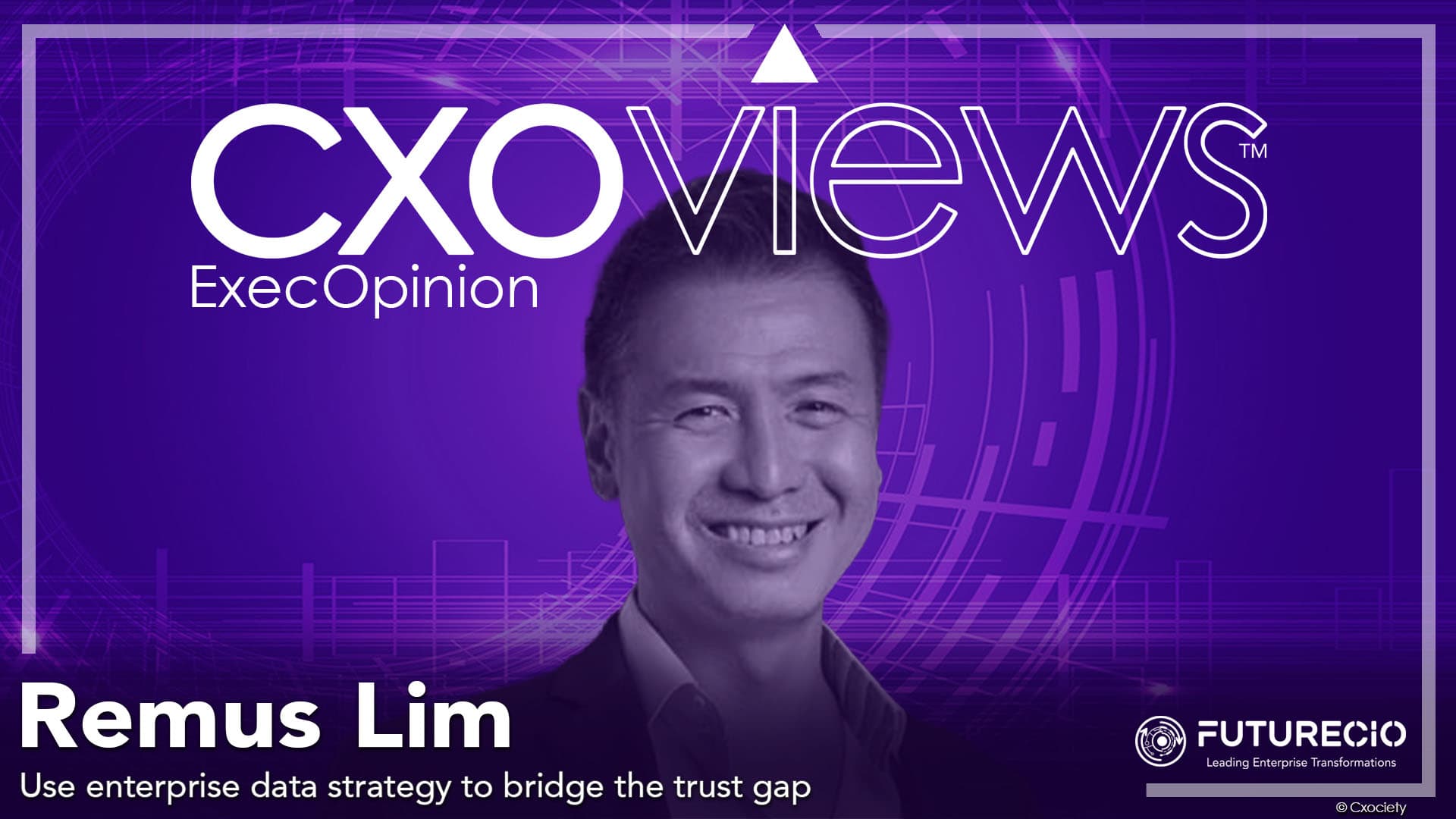
For Remus Lim, senior vice president for Asia Pacific & Japan at Cloudera, the conversation about sovereignty is not new. “We started in 2008, and back then there wasn’t really any cloud, so we started on-premises. A lot of our customers, even back then, were primarily regulated organisations—banks, telcos and the public sector,” he explains. “Sovereign AI, or sovereign data, isn’t new to us.”
This heritage provides a distinct vantage point. While many AI and data players were born in the cloud, Cloudera’s journey moved in the opposite direction—from on-premises foundations to hybrid architectures. Lim observes that the current urgency around sovereignty reflects a belated realisation among cloud-native players that sensitive workloads require air-gapped environments where data doesn’t traverse public networks.
The regional picture in Asia Pacific is notably diverse. Lim notes that ANZ markets followed the US trend toward cloud-first strategies, but other markets—Singapore, Malaysia, India, Korea, and Japan—remain predominantly on-premises.
“A lot of customers are still very much on-premises,” says Cloudera’s Lim. “They may have certain workloads in the cloud, but they haven’t gone all in.”
This fragmented landscape complicates the pursuit of true hybrid architecture, which Lim defines not as a mix of environments but as a single pane of glass providing visibility and control regardless of where workloads are deployed.
By that definition, he acknowledges, “I don’t think many of our customers have actually achieved a true hybrid environment yet.”
The governance imperative
The gap between perceived data readiness and actual governance capability is striking. At the same time, 84% of IT leaders express confidence in the accuracy of their data, while only 18% report that their data is fully governed. This 66-point confidence gap, as Cloudera’s research describes it, is precisely where AI initiatives quietly fail.
Lim frames the governance challenge in practical terms: “If you look at banks, government agencies, or any regulated organisation, they’re all facing the same dilemma. On one hand, they want to make sure data is readily available to the users who need it. On the other hand, they need the right governance to ensure that the right data goes to the right people.”
This is where platforms like Cloudera’s SDX (Shared Data Experience) come into play. Rather than requiring customers to re-architect legacy systems, SDX provides a metadata layer that acts as a data fabric, connecting to various data sources and enforcing access controls on top of existing infrastructure.
Technologies such as Trino and Apache Iceberg enable this federation, allowing organisations to maintain their traditional systems while building modern AI capabilities alongside them.
Bringing AI to the data
Perhaps the most significant architectural principle emerging from these conversations is the imperative to bring AI to the data, rather than moving data to AI. Lim articulates this clearly:
“We don’t move sensitive data to where the AI is—for example, into the public cloud. Instead, we bring AI to where the data already resides. That reduces the need to transfer data across networks and helps mitigate the risk of exposing sensitive information.” Remus Lim
This principle has guided early adopters in the region. OCBC Bank built its own OCBC GPT within its firewall rather than using public generative AI services directly. This air-gapped approach gives the bank control over context and data grounding, reducing the risk of hallucinations or out-of-context answers.
In an interview with Forrester analyst Leslie Joseph, the former head of OCBC’s Group Data Office, notes that “regulation isn’t a barrier when you bake it into your AI strategy from day one.”
The bank’s AI-powered “Next Best Conversation” platform now delivers 250 million personalised insights annually to customers through its mobile app, achieving campaign conversion rates 1.5 to 2 times higher than traditional approaches.
The hybrid cloud horizon
Looking toward 2027, Gartner projects that 90% of organisations will adopt a hybrid cloud approach, signalling that flexibility has moved from competitive advantage to basic requirement. This aligns with Lim’s observation that single-cloud strategies no longer meet the demands of performance, security, regulatory compliance, and business continuity.
Cloudera’s acquisition of Taikun, a Kubernetes and cloud infrastructure management platform, reflects this reality. The integration provides a fully container-native platform that simplifies deployment across public clouds, on-premises data centres, and air-gapped environments—all through a unified control plane.

Industry analyst Sanjeev Mohan notes the significance: “Organisations are suffering more than ever from fragmented data and application management across diverse infrastructures, increasing complexity, costs, and limiting data/AI initiatives”.
From silos to a single pane of glass
The persistence of data silos remains one of the most stubborn obstacles to enterprise AI success. Lim traces this to the evolving nature of data itself:
“If you go back years ago, organisations were dealing mainly with structured data. Then, as technology evolved, they had to deal with semi-structured data. Today, they’re dealing with massive amounts of unstructured data as well.” Remus Lim
The complexity multiplies as AI begins making decisions based on data, requiring closed feedback loops where model outcomes feed back into the data lifecycle. This continuous evolution means organisations can’t simply solve the silo problem once and be done with it. As Lim observes, “It’s an ongoing process that’s constantly evolving.”
The Data Readiness Index underscores the consequences of failing to address this challenge. Data quality issues are cited more often than cost overruns or integration difficulties as the primary reason AI ROI falls short.
Infrastructure performance constraints have hindered operational initiatives for 73% of respondents, with nearly a third describing this as the consistent norm rather than an occasional exception.
Outcome-driven AI
For organisations navigating this complexity, Lim advocates starting with business outcomes rather than technology: “The organisations that are most successful tend to anchor their budgets around use cases, not the other way around.”
He categorises successful AI initiatives into three broad objectives: increasing revenue, improving productivity and managing costs, and mitigating risk.
This outcome-driven approach contrasts with what Lim describes as the “everyone is talking about AI” strategy, in which organisations allocate funds to experimentation without clear business alignment. “Those organisations tend to spend more time piloting, researching and experimenting as they work out where AI can deliver value,” he notes.
The challenge, as Cloudera’s research reveals, is that many organisations believe they have a clear data strategy (85%) yet acknowledge that their data foundations are inadequate for AI at scale.
This is the “AI readiness illusion”—the belief that organisations are prepared to scale AI even as critical data challenges remain unresolved. Closing this gap, Lim suggests, requires honest assessment and a willingness to build from the data foundation upward.
As enterprises across Asia Pacific and beyond confront the limits of the AI readiness illusion, the path forward demands more than ambition. It requires genuine data readiness—the ability to deliver accurate, trusted, real-time AI outcomes using enterprise-proprietary data.
Those that close this gap, as Lim’s experience with customers like OCBC Bank demonstrates, will be best positioned to drive lasting impact and lead the next era of intelligent business. As noted in a Forrester blog post: “The future of banking will be fundamentally altered by AI, changing how we operate and engage with customers.”