





Huawei has unveiled the Peerium Computing Architecture, a new computing architecture that claims to enable up to one million processors to work as a single computer. The architecture aims to meet growing demand for AI compute.
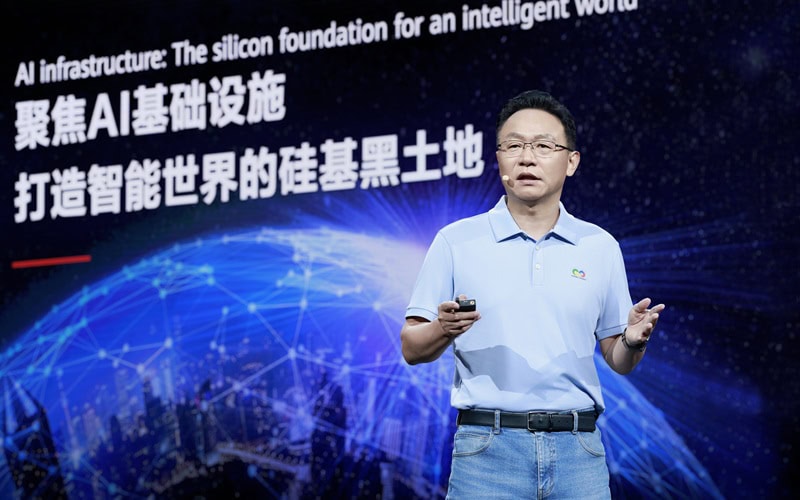
“In the AI era, Huawei is drawing on the Peerium Computing Architecture we pioneered to continuously build the SuperPoDs and SuperPod-based SuperClusters that meet customer needs for training and inference, making computing power available everywhere and intelligence accessible to all,” Eric Xu, Huawei’s rotating chairman, said during Huawei Connect 2026 in Shanghai.
Peerium Computing Architecture
Through nested parallelism, unified memory addressing, and peer interconnect, the new architecture enables strong scaling to the million-processor level. It introduces Nested BSP (Nested Bulk Synchronous Parallel), which extends the von Neumann single-machine architecture. Nested BSP departs from the traditional, commonly used controller–agent architecture, enabling a million processors to work as one larger computer.
Peerium’s key technology is the UnifiedBus (UB), built on a single open protocol and a high-speed bus that scales without limit to connect CPUs, NPUs, memory, SSDs, network interface cards (NICs), and switches. It enables peer interconnect across compute, storage, and networking.
Huawei is implementing the new architecture in its Atlas 950 SuperPoD and SuperPoD-based SuperClusters. The company is already deploying an Atlas 950 SuperCluster with 256,000 cards, while the Atlas 960 system, based on near-packaged optics (NPO), is currently under testing.
AI infrastructure
Huawei said it has focused on building AI infrastructure, with an AI strategy centred on computing power and monetising hardware.
With the SuperPoDs and SuperClusters, the company aims to build a solid computing foundation and offer a new option for the world.
“And we will continue to work together to drive shared success, growing together with our customers and partners around the world,” David Wang, the deputy chairman of the Board and rotating chairman at Huawei. “Let’s work together to build a fully connected, intelligent world.”