
Malaysia’s AI journey is at a crossroads. While massive cloud investments and government initiatives have built the “roads,” most enterprises are still constructing the car.
The initial phase of experimentation with standalone Large Language Models (LLMs) like ChatGPT revealed that many enterprises faced a harsh reality: LLMs alone are not enough.
Now, as the industry moves toward Agentic AI, systems that can perceive, decide, and act, the conversation is shifting from conversational toys to operational assets.
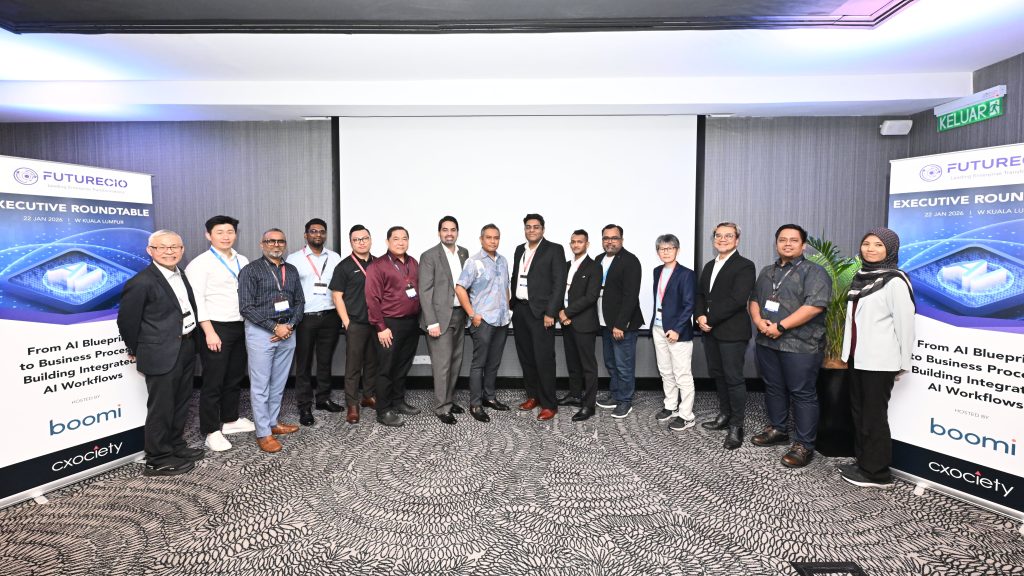
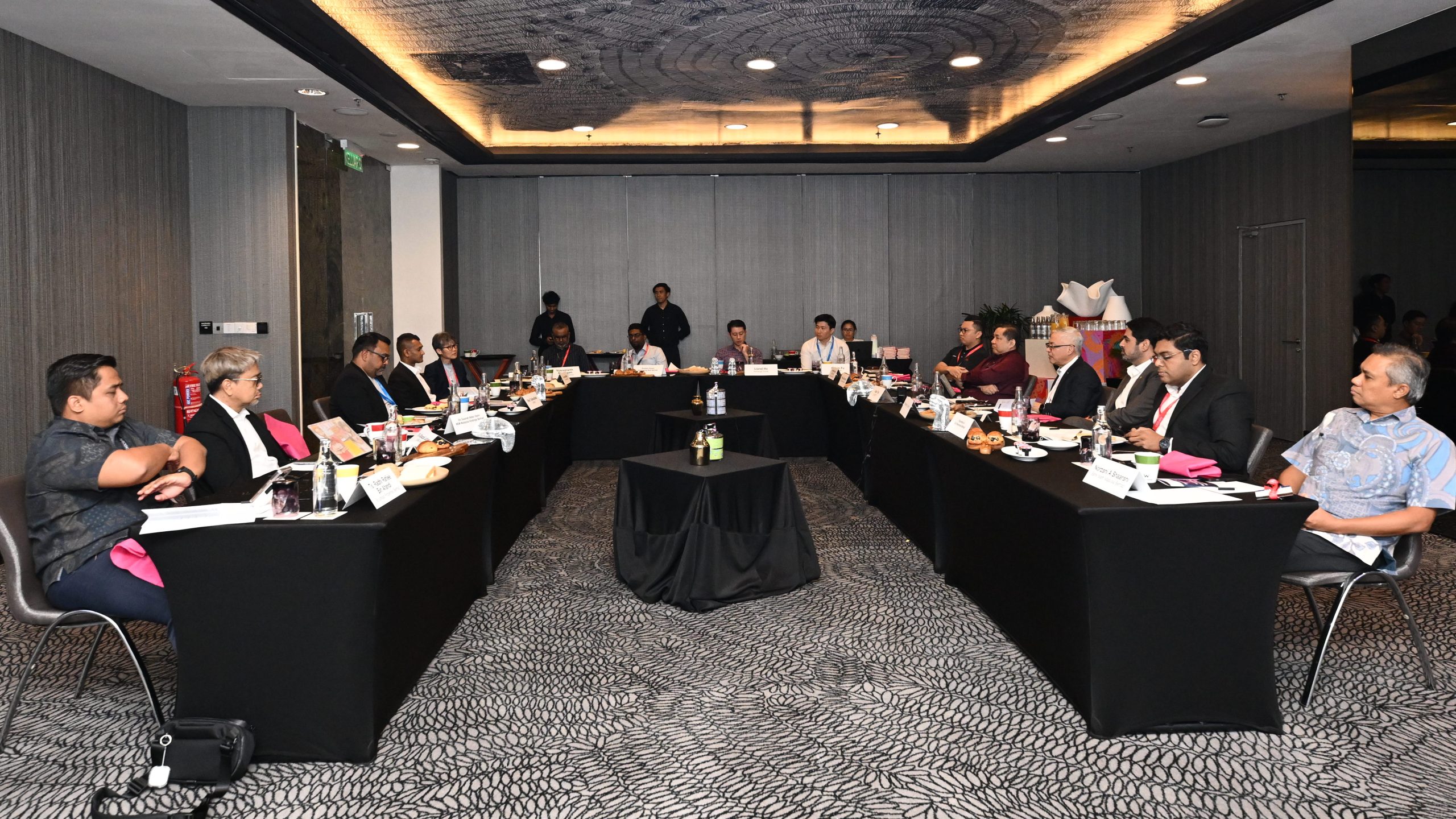
At a recent CXOCIETY roundtable in Kuala Lumpur, co-organised with Boomi, technology leaders across Malaysia’s financial, agricultural, and industrial sectors gathered to discuss the realities of deploying AI in production. The consensus was clear: the “shiny tool” phase is over; it’s now the era of the foundation.
The 95% failure rate: Why tools aren’t enough

The discussion opened with a sobering statistic regarding the current state of innovation. Ram Tallavajhala, an innovation & strategy architect at Boomi, noted that research from institutions such as MIT indicates that nearly 95% of AI proofs of concept (PoCs) fail to reach production.
AI agents shouldn’t sit directly on top of core systems. They need a governed integration layer, managed APIs, and human oversight to operate responsibly at scale.
“Vendors bring in impressive AI tools every day. But without the right organisational foundations — integration, governance, and trusted data — those initiatives stall before they ever reach scale,” Tallavajhala explained.
He argued that organisations are hitting a chasm between their systems of record, including the ERPs, CRMs, and finance systems. These serve as the “crown jewels” and the agentic layer where AI makes decisions. Bridging this gap requires a holistic integration strategy.
“You can’t simply give an AI agent direct access to SAP and expect it to operate safely or effectively. Without an integration and governance layer in between, it won’t scale and it won’t build trust,” Tallavajhala warned.
To truly scale, enterprises need a robust integration layer that brings applications together, coupled with API management and a human-in-the-loop to build business trust.
The maturity spectrum: Crawl, walk, run
The participants’ organisations sit at varying stages of AI maturity, navigating a model often described as “crawl, walk, run.” For First Advantage, the journey is currently in the “walk and run” phase.

Yan Yee Boey, the director of technology for APAC for a global software company in the HR technology industry, noted that while AI helps answer questions, the results are not yet infallible. “Sometimes they give good answers, and sometimes kind of go back to review the answer again,” she shared.
Her focus remains on identifying low-hanging fruit to gain face time for the technology before moving to full-scale deployment.

In the highly regulated banking sector, the pace is more measured. Manimaran Rajagofal, FVP and global market lead at UOB, noted that the industry remains in a “questionable” state compared with a decade ago but is gradually implementing execution frameworks.

Tallavajhala added that, for financial organisations, "agentic" is a bit of a stretch because they deal with people’s financial trust. This sentiment was echoed by Dinesh Ruebben, head of delivery for security projects at Hong Leong Bank, who emphasised that security is non-negotiable.
The trust deficit and the human in the loop
A recurring theme was the necessity of human oversight to bridge the trust gap. Tallavajhala pointed out that businesses often cannot “trust what the AI does in production” because they aren’t ready to “give away the keys to the bank”. This is why a human-in-the-loop is a critical architectural requirement for any agentic system.
Boey emphasised that in her organisation, AI is currently a tool from an “operational standpoint” but still requires defining frameworks for accuracy. In the banking sector, Rajagofal insisted on a “checker in place.” "We cannot just rely on AI. There must be some checker in place at this junction, because it’s not really mature yet,” he noted, explaining that the technology is not yet ready for 100% autonomy in financial services.
The integration chokehold: Legacy data and silent silos
The primary hurdle to action-oriented AI is the data-action gap. Legacy systems, often decades old, were never designed for the fluid data exchange AI requires.
One delegate to the roundtable noted that organisational design is often as much a hurdle as the technology itself: ““Organisations are not designed to make it actionable agents can't work like that. They can’t go in a bureaucratic way. We must redesign organisations to ensure AI becomes truly effective.”
He advocated a “mesh architecture” in which a central capability enables scalable flexibility without being tightly bound to any single [AI] player.
Another delegate also highlighted integration complexity as a major slowing factor, particularly when modernisation meets users who “still want to retain the legacy system”.

To address this, Norzani A Shaarani, director of digital & technology at Bank Islam Malaysia Berhad, shared that they are adopting a “low risk and high impact approach.” By using custom microservices for small projects, they can deliver immediate results within a conventional framework.
The ROI paradox: Productivity vs. new revenue
One of the most contentious topics was quantifying business value. Boards and CFOs are increasingly asking for more than just efficiency metrics.
One delegate posed a fundamental question on the timing of investment: “What is the point of entering now at a loss level?” He suggested that until the cost of implementation aligns with a clear ROI, organisations may be hesitant to rush in, particularly given the technological advances emerging from markets like China. He argued that AI needs to create new revenue opportunities rather than just fixing “broken processes.”
Conversely, Tallavajhala argued that there is a significant “risk of not doing [AI].” “Risk management can’t be one-sided. Leaders must assess not only the downside of adoption, but the strategic risk of falling behind. In today’s environment, inaction can be the greater threat,” he warned.

In sectors like agriculture, the value is already becoming tangible. Vijayaananth Arumugam, head of R&D IT infrastructure at SD Guthrie Berhad, explained how they quantify value based on cycle time reduction and velocity. By using AI to process decades of research data for weather forecasts and soil analysis, they empower researchers to make scientific decisions at the “seed” level.
Monetisation and the internal marketplace
During the discussion, a delegate introduced a forward-thinking concept: the internal marketplace. He suggested that once integration layers are sorted, organisations can further monetise their internal capabilities.
“Within your organisation, you can create a marketplace... where you can publish these things and then make them discoverable,” he explained. This allows anyone to subscribe to data products or agents, creating a central repository that helps the organisation grow.

Andrew Wong Sui Tong, a seasoned technology leader in Malaysia, corroborated this direction, noting their use of APIs to ensure that even legacy systems can be integrated into such a plan.
Governance and the "one ring" strategy
As AI agents begin to proliferate, often natively within SaaS platforms like Salesforce Agentforce or SAP, the management of these disparate "minions" becomes a nightmare.
One delegate emphasised the need to stress test “the management narrative and ensure readiness for “dark times.” He noted that board concerns today often revolve around disclosures, security, and failures.
Tallavajhala stressed that organisations need a “governance layer that maintains visibility and control over everything that’s happening.” He described a “one ring that rules them all” approach – a unified control plane to manage AI agents consistently across platforms such as Azure, Salesforce, and AWS. This oversight is critical for detecting AI drift, where an agent’s behaviour gradually shifts over time. For example, a finance bot tasked with routine approvals could begin authorising million-dollar purchase orders, even though its original objective hasn't changed.

Kheng Chun Ng, head of IT at a major organisation in the country, highlighted the specific challenge of complying with local regulations like the Cyber Security Act and PDPA. “We are struggling with major classifications... especially want to comply with the PDCA (PDPA)," he admitted.
The technical debt trap
A key warning from the roundtable was the risk of building a full AI stack internally. Tallavajhala warned that building such a system could take time, resources and budget. “You could spend two years building it yourself and then a provider arrives with an end-to-end solution. Suddenly, the return on investment evaporates,” he warned.
Instead, he advises organisations to focus on building capability and architectural flexibility. With a strong foundation in place, enterprises can pivot as the market evolves — choosing whichever model or provider is most cost-effective or performant at the time, whether that means shifting from OpenAI to Azure, or even to an on-chip model as economics change.
The strategic pivot
The roundtable concluded with a clear realisation: to move from AI experimentation to operational reality, enterprises must build a foundation that is rock solid yet flexible enough to pivot to any provider.
Tallavajhala shared that the Boomi platform has evolved into an AI agentic transformation platform specifically to address these challenges. By providing native capabilities for integration, data management, and API security, it enables organisations to pivot from one use case to another without incurring significant technical debt.
The sweet spot, as the discussion revealed, lies in using a toolset that works out of the box to provide a unified governance layer. This approach allows businesses to build the necessary internal capabilities and pivot to the most cost-effective AI providers.
In an era when “everything is going to be an AI agent,” having a platform like Boomi to orchestrate and govern that transformation provides a central nervous system for the intelligent enterprise.