
• About
  • Subscribe
  • Contact
Wednesday, April 8, 2026
    Login
  • Management Leadership
    • Growth Strategies
    • Finance
    • Operations
    • Sales and Marketing
    • Careers
  • Technology
    • Infrastructure and Platforms
    • Business Applications and Databases
    • Big Data, Analytics and Intelligence
    • Security
  • Industry Verticals
    • Finance and Insurance
    • Manufacturing
    • Logistics and Transportation
    • Retail and Wholesale
    • Hospitality and Tourism
    • Government and Public Services
    • Utilities
    • Media and Telecommunications
  • Resources
    • Whitepapers
    • PodChats
    • Videos
  • Events
No Result
View All Result
  • Management Leadership
    • Growth Strategies
    • Finance
    • Operations
    • Sales and Marketing
    • Careers
  • Technology
    • Infrastructure and Platforms
    • Business Applications and Databases
    • Big Data, Analytics and Intelligence
    • Security
  • Industry Verticals
    • Finance and Insurance
    • Manufacturing
    • Logistics and Transportation
    • Retail and Wholesale
    • Hospitality and Tourism
    • Government and Public Services
    • Utilities
    • Media and Telecommunications
  • Resources
    • Whitepapers
    • PodChats
    • Videos
  • Events
No Result
View All Result
No Result
View All Result
Home Technology

Reducing software maintenance costs with AI

by Melinda Baylon
April 8, 2026

Software maintenance is often overlooked, yet it remains the backbone of stability for enterprise systems.

Software maintenance, as defined by Gartner, involves updating software, adding new functions, fixing bugs and solving problems. When deprioritised, organisations expose themselves to unnecessary risks, such as cyber threats, system outages, and costly emergency fixes.

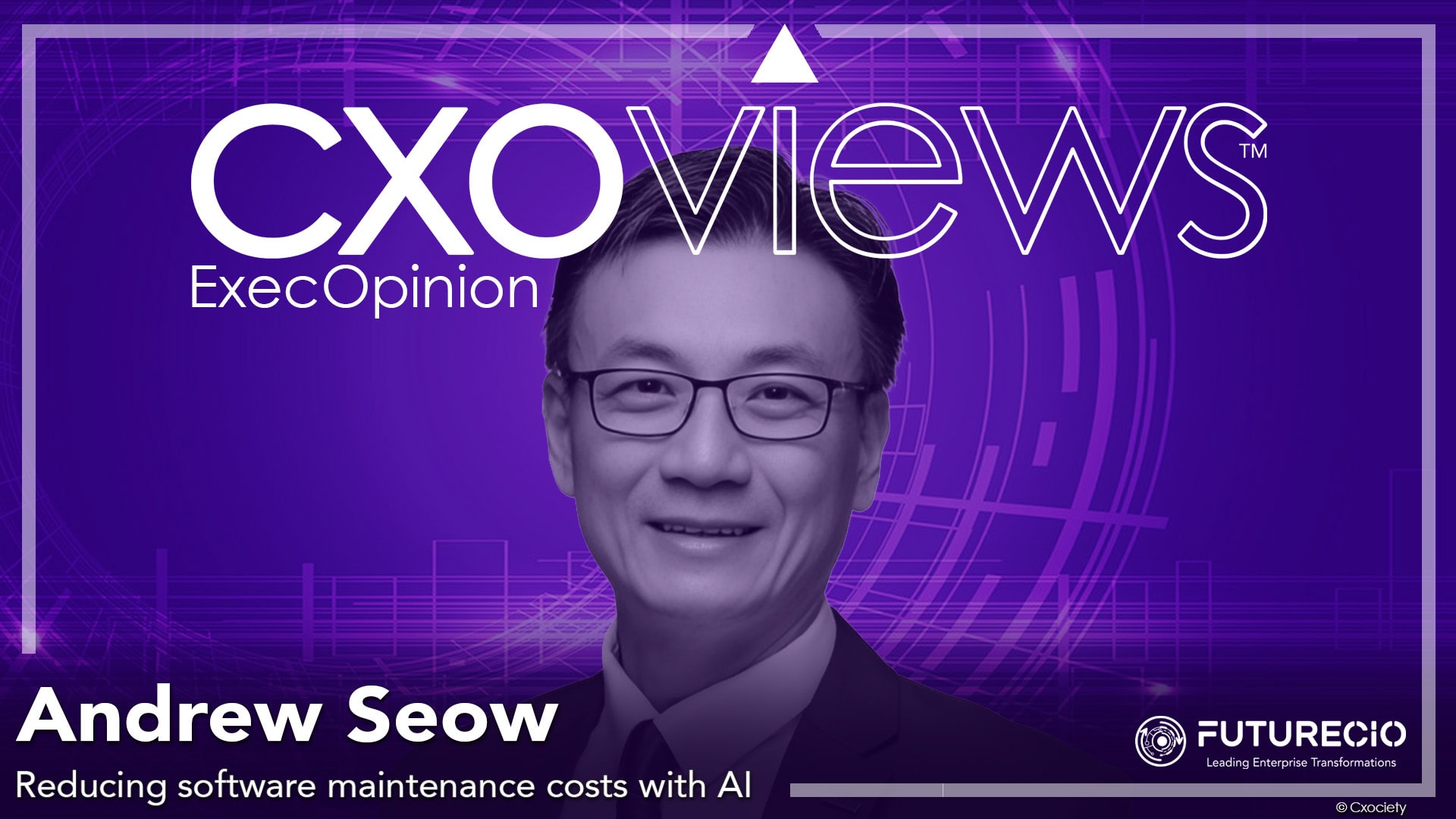
Andrew Seow
Andrew Seow

"Over time, systems without upkeep become more fragile, harder to integrate and less adaptable to business change," said Andrew Seow, GVP and Regional GM for Southeast Asia and Greater China at Rimini Street.

Beyond operational risks, poor maintenance strategies can also erode organisational control. According to Seow, vendor control is one of the most pressing concerns.

"Without regular, strategic maintenance, organisations feel pressure to undergo expensive upgrades and migrations on vendor-dictated timelines, often without a clear ROI. When vendors hold all the cards, it's the business that loses agility," he explained.

Strong maintenance strategies, on the other hand, keep IT in control, help extend system life, and optimise spending. By leveraging stable, well-established systems as a foundation for transformation, software maintenance empowers businesses to modernise and innovate on their own terms.

The high cost of maintenance in APAC

The demand is for support that's not just 'available,' but useful, cost-effective and aligned to business needs. Andrew Seow

Across the Asia Pacific region, organisations continue to pay significant sums for standard vendor software maintenance, often up to 22% of annual license fees.

"The vendor support profit margin is typically more than 90%. I don't know many businesses with such a profit margin, so one must ask: what am I paying for? What is the value I'm receiving in return? Is there a better way?" Seow said.

As these questions arise, more organisations are re-evaluating traditional models. Many are exploring alternatives that provide greater flexibility, cost efficiency, and alignment with business needs.

"As organisations realise that vendor upgrades are not always in their best interest, they are exploring alternatives that give them more control. The demand is for support that's not just 'available,' but useful, cost-effective and aligned to business needs," Seow added.

Shifting from cost centres to value drivers

Seow emphasised that reducing software maintenance costs is no longer optional, but essential. For many enterprises, excessive spending on vendor support stalls innovation investments.

"Too many enterprises are overpaying for vendor support that adds little value. With much to invest in, such as AI, workflow automation, and new capabilities that enhance customer experiences, tying up critical resources just keeping the lights on is a waste of people, time and money," Seow said.

The solution, he noted, involves supporting and optimising core systems with third-party support and services, and prioritising business value over vendor timelines.

"Reducing these costs doesn't mean lowering standards," he emphasised.  "It means being deliberate - ensuring the support meets business needs and drives maximum value out of mission-critical systems."

This shift does not mean compromising standards. Instead, it enables organisations to right-size their maintenance strategies, freeing up budget and talent to drive innovation, improve agility, and refocus IT on outcomes that matter most.

Driving efficiency through third-party support and AI

Third-party support models are emerging as a key enabler of cost reduction and operational efficiency. By moving away from vendor-led maintenance, organisations can significantly reduce support costs, avoid disruptive upgrades, and access broader services, thereby redirecting resources toward innovation.

Seow highlighted Brazilian pharmaceutical company Apsen Farmacêutica, which automated 70% of its workflow processes through Rimini Street and ServiceNow, without upgrades or replatforming.

"Innovation was delivered in weeks, not years," he noted.

AI is also playing a vital role in transforming maintenance. Rimini Street's AI-based Case Assignment Advisor, for instance, matches incoming support tickets to the most suitable engineer within seconds by analysing more than 35 variables. It results in a 23% reduction in case resolution time.

The platform has since evolved to include capabilities such as sentiment analysis and proactive issue prevention.

However, Seow emphasised that AI alone is not enough.

"While AI can be leveraged by support engineers, it's the knowledge banked over decades, and a deep understanding of clients' intricate systems and customisations, that drives a truly differentiated support experience," he said.

The future of software maintenance

The future of maintenance is all about flexibility. Andrew Seow

"The future of maintenance is all about flexibility," Seow said.

Organisations are beginning to seek support models that align with their operational realities, instead of rigid upgrade timelines or vendor milestones.

"We're seeing more companies take ownership of their IT roadmap, whether that means extending the life of existing systems or choosing support partners that give them room to innovate," he said.

Looking ahead, agentic AI ERP systems will replace traditional ERP strategies, urging users to leverage software maintenance to keep existing systems running smoothly and to support the new needs of the business, driven by AI agents and workflows.

"It's about leveraging the full potential of systems, preserving and activating the unique data that feeds the AI machine, and enabling enterprise-wide capabilities, not just siloed systems," Seow explained.

As organisations navigate an ever-evolving digital landscape, the role of software maintenance is being redefined, from a cost centre to a strategic enabler of innovation.


Related:  UnionBank uses event streaming to meet growing retail volume
Tags: Artificial Intelligencedigital transformationRimini Streetsoftware maintenance

Melinda Baylon

Melinda Baylon joins Cxociety as editor for FutureCIO and FutureIoT. As editor, she will be the main editorial contact for communications professionals looking to engage with aforementioned media titles. 

Melinda has adecade-long career in the media industry and served as TV reporter for ABS-CBN and IBC 13. She also worked as a researcher for GMA-7 and a news reader for Far East Broadcasting Company Philippines. 

Prior to working for Cxociety, she worked for a local government unit as a public information officer. She now ventures into the world of finance and technology writing while pursuing her passions in poetry, public speaking and content creation. 

Based in the Philippines, she can be reached at melindabaylon@cxociety.com

No Result
View All Result

Recent Posts

  • Reducing software maintenance costs with AI
  • Standard Chartered launches its first Global Fusion Centre in Malaysia
  • Circles and Huawei partner to advance AI-native digital telecom solutions
  • Oracle to equip Malaysian talent via digital skills development initiative
  • PodChats for FutureCIO — Agentic Flash: Autonomous innovations powering Asia’s AI scale

Live Poll

Categories

  • AI and Machine Learning
  • Artificial Intelligence
  • Big Data, Analytics & Intelligence
  • Business Applications & Databases
  • Business-IT Alignment
  • Careers
  • Case Studies
  • CHRO
  • CISO
  • CISO strategies
  • Cloud, Platforms and Ecosystems
  • Cloud, Virtualization, Operating Environments and Middleware
  • Compliance and Governance
  • Compliance and Governance|Technology
  • Computer, Storage, Networks, Connectivity
  • Corporate Social Responsibility
  • Culture and Behaviour|People
  • Customer Experience / Engagement
  • Cyber risk management
  • Cyberattacks and data breaches
  • Cybersecurity careers
  • Cybersecurity operations
  • Data Protection
  • Data Protection
  • Digital Transformation
  • Education
  • Education
  • ESG and sustainability
  • Finance
  • Finance & Insurance
  • Future Workplace
  • FutureCISO
  • General
  • Governance, Risk and Compliance
  • Governance, Risk and Compliance
  • Governance, Standards and Regulations
  • Government and Public Services
  • Growth Strategies
  • Hospitality & Tourism
  • HR, education and Training
  • Industry Verticals
  • Infrastructure & Platforms
  • Insider threats
  • IT-OT integration
  • Latest Stories
  • Logistics & Transportation
  • Management Leadership
  • Manufacturing
  • Media and Telecommunications
  • News Stories
  • Operations
  • Opinion
  • Opinions
  • People
  • Process
  • Remote work
  • Retail & Wholesale
  • Risk Management
  • Sales & Marketing
  • Security
  • Sustainability
  • Tactics and Strategies
  • Technology
  • Utilities
  • Videos
  • Vulnerabilities and threats
  • White Papers

Strategic Insights for Chief Information Officers

FutureCIO is about enabling the CIO, his team, the leadership and the enterprise through shared expertise, know-how and experience - through a community of shared interests and goals. It is also about discovering unknown best practices that will help realize new business models.

Quick Links

  • Videos
  • Resources
  • Subscribe
  • Contact

Cxociety Media Brands

  • FutureIoT
  • FutureCFO
  • FutureCIO

Categories

  • Privacy Policy
  • Terms of Use
  • Cookie Policy

Copyright © 2022 Cxociety Pte Ltd | Designed by Pixl

Login to your account below

or

[wpli_login_link]

Not a member yet? Register here

Forgotten Password?

Fill the forms bellow to register

All fields are required. Log In

Retrieve your password

Please enter your username or email address to reset your password.

Log In
No Result
View All Result
  • Management Leadership
    • Growth Strategies
    • Finance
    • Operations
    • Sales and Marketing
    • Careers
  • Technology
    • Infrastructure and Platforms
    • Business Applications and Databases
    • Big Data, Analytics and Intelligence
    • Security
  • Industry Verticals
    • Finance and Insurance
    • Manufacturing
    • Logistics and Transportation
    • Retail and Wholesale
    • Hospitality and Tourism
    • Government and Public Services
    • Utilities
    • Media and Telecommunications
  • Resources
    • Whitepapers
    • PodChats
    • Videos
  • Events
Login

Copyright © 2022 Cxociety Pte Ltd | Designed by Pixl

Subscribe